Are you planning a trip from Sofia to Varna or vice versa?
Your options are to travel with your own car (if you have one), a shared ride (might not be the safest), a bus (that feels like an infinity), or by train.
Contrary to popular belief amongst most Bulgarians, a train ride might be the most enjoyable, relaxing and least stressful.
Here is the time to make a disclaimer. I would recommend the train ride only if you chose the “fast” overnight train in a sleeping compartment. Otherwise, some if these rides take a bit too much time to enjoy being confined to a seat.
The sleeping wagons are probably the newest in the Bulgarian railway and very nicely maintained. It is the closest you could get to a Western European experience in a Bulgarian train.
In the current situation with COVID-19, having the compartment only for myself was quite comforting and allowed me to fully relax and sleep like a baby through the whole ride from Sofia to Varna.
There are a few options to chose from. You could either share the compartment with one or two people, or pay the extra few leva (BGN) for the so-called business class which in essence is the same compartment only at your disposal.
There is a sink and a luggage hanger in each comparment. But beware there is no storage available for big pieces of luggage.
Sleeping compartment in the fast train between Sofia and Varna
Bathrooms are shared, but quite neat and frequently cleaned.
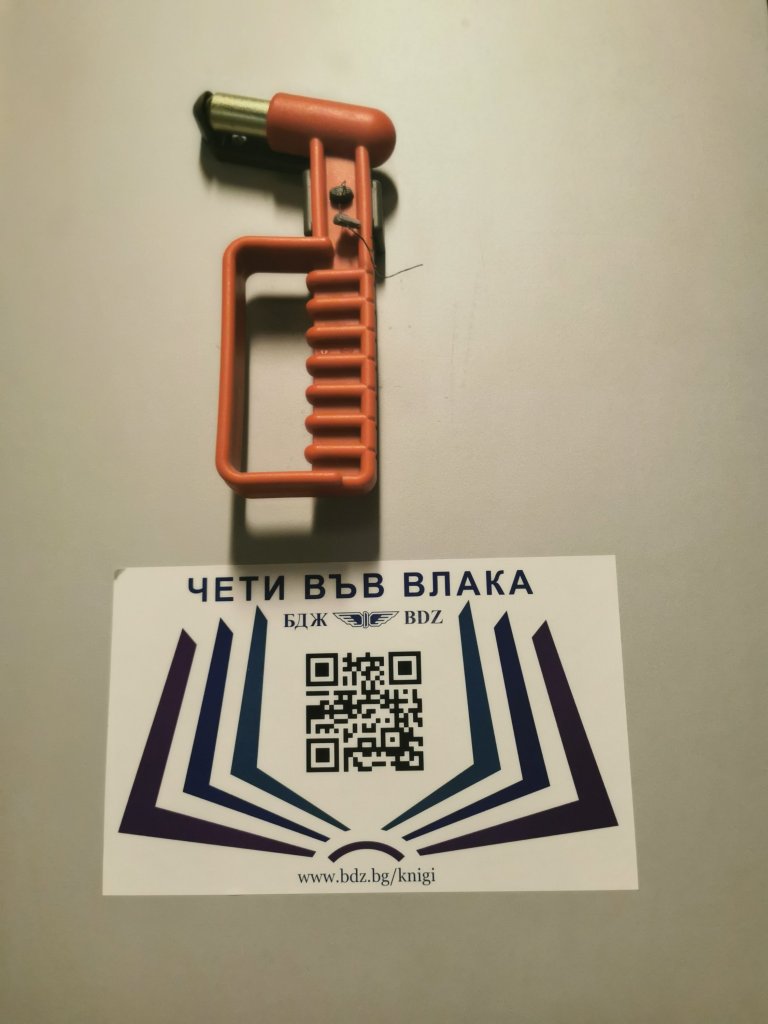
A nice surprise was this initiative to promote reading(unfortunately only publications in Bulgarian available at the time).
Books available online for anyone interested
Note: If you are traveling during the touristic season on the Bulgarian Blacksea coast, make sure to book in advance through the website of the Bulgarian railway.
How an ancient fortress, became a monastery, then turned into a royal palace to end up as a government residence
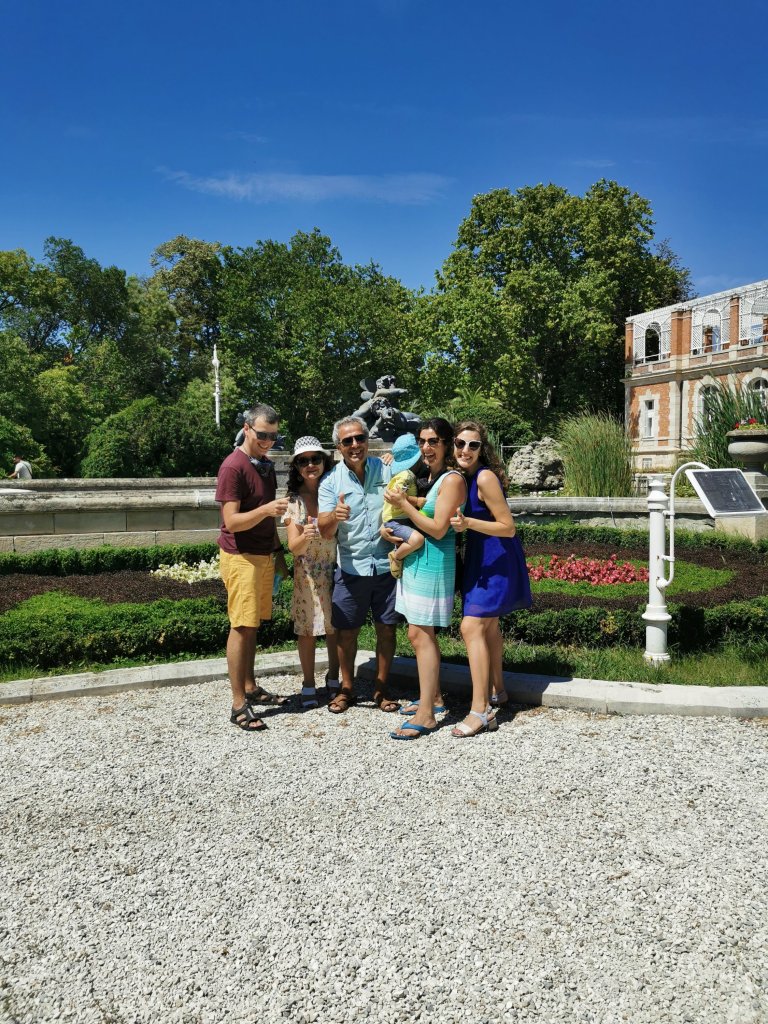
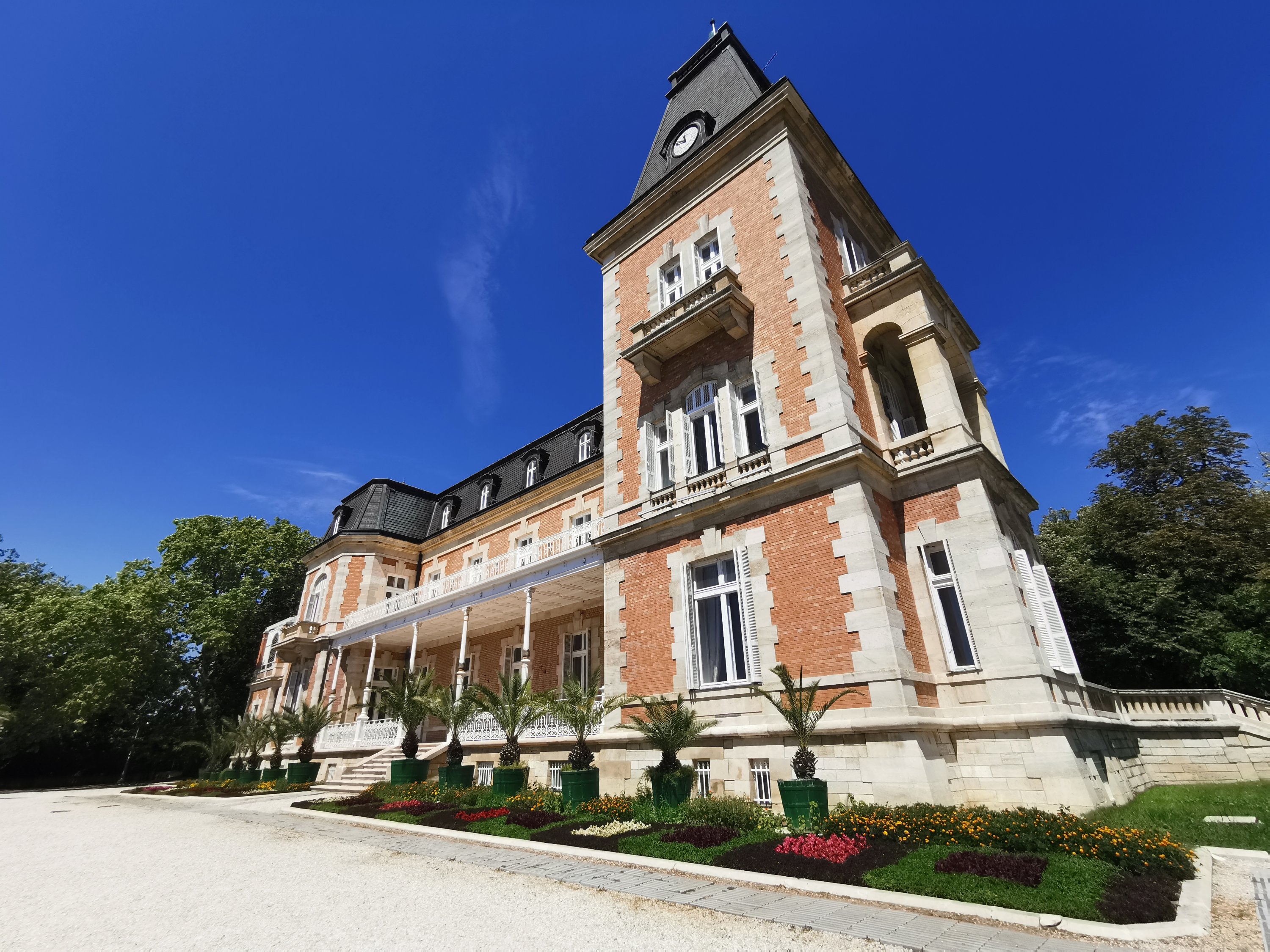
Earlier this summer we decided to visit the Euxinograd residence near Varna. Currently a government residence, Euxinograd welcomes tourist visits only after a registration well in advance. Due to COVID-19 measures it was even harder to plan the visit so we left it for better days. Luckily, tours were restored and in the last weekend of July, in the heat of summer, I went to visit it for the first time. I did it the Balkan way- together with my parents, my sister, her husband and my cute nephew. We were only missing my boyfriend and a few cousins, aunts and uncles to complete the stereotype.
Frankly, I knew very little about the place prior to our visit so it was a very interesting and enjoyable experience despite the temperature hitting 37 degrees.
Let’s start with its history.
Very very long time ago, during the fourth to fifth centuries CE the area was home to a harbour settlement, which by the middle ages had become a city involved in shipping and trade. By the 15th century, however, only the port and fortress remained.
In mediaeval times, the settlement had a mixed population, of Greeks, Bulgarians, Genoese and Venetians, among others, a sign of its place in trade and commerce along the Black Sea coast at the time.
In the 19th century the ruins of the fortress wall were still clearly visible and the site was examined and measured by Czech-Bulgarian archaeologist Karel Škorpil in 1899.*
At the end of the nineteenth century Bulgaria got its first monarch in its modern history. Alexander of Battenberg – the first prince (knyaz) of the Principality of Bulgaria visited Varna in 1880 and he was welcomed at the St. Dimitar monastery, which was situated at the same place, where now the residence stands. The monarch liked the local nature so much, that two years later the Varna municipality bestowed him the monastery and its adjoining lands.
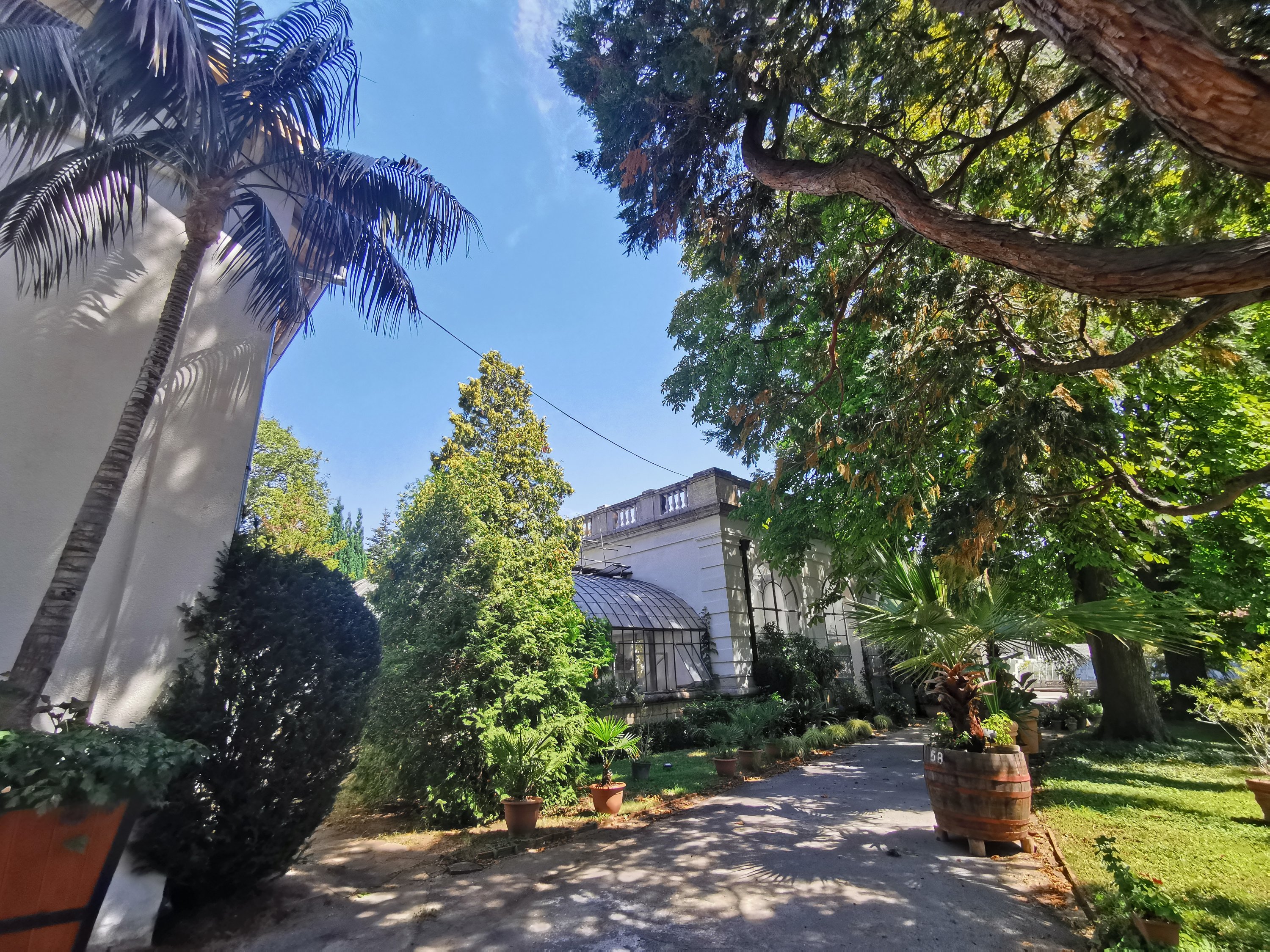
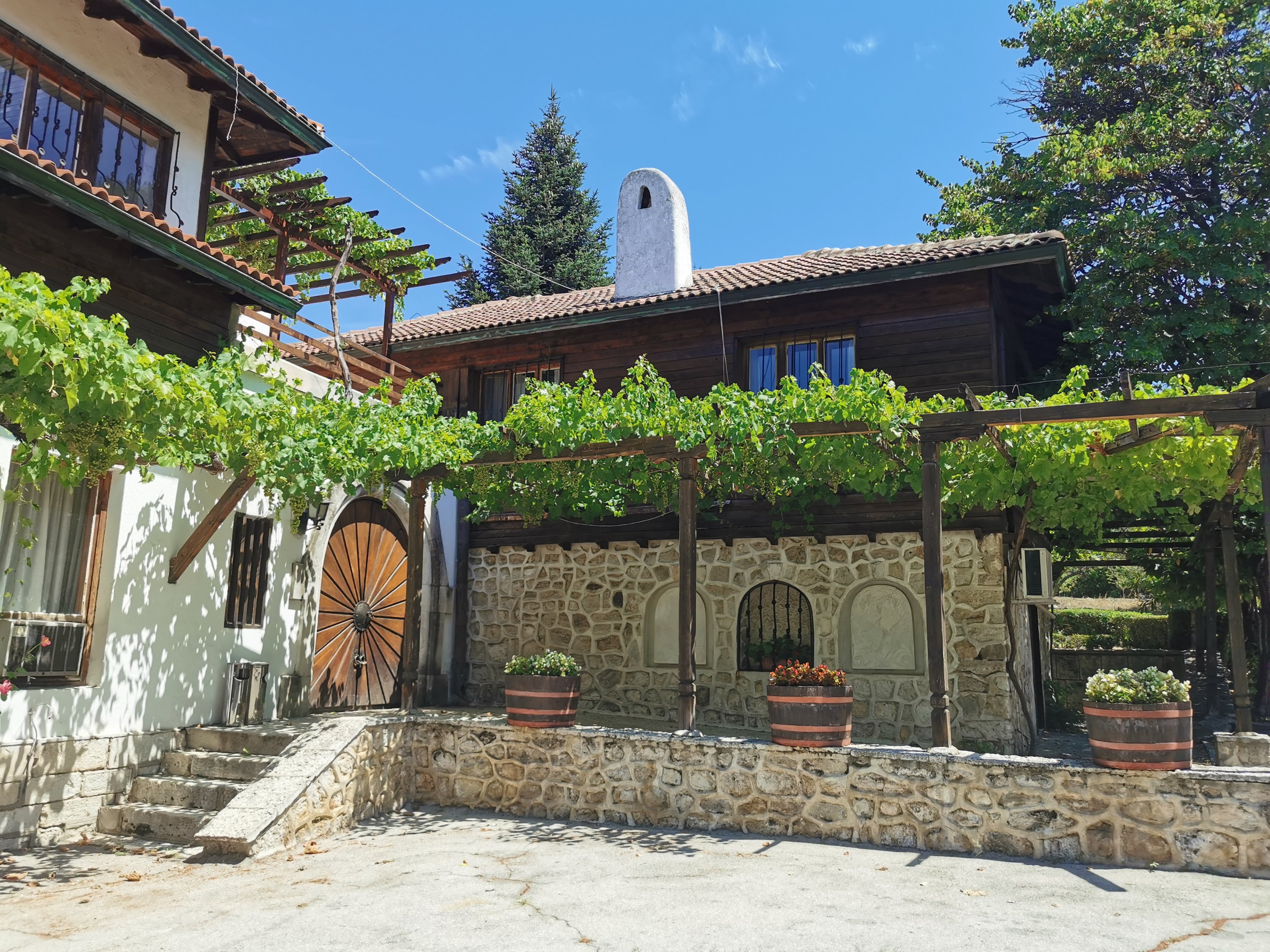
Long story short, he built a palace, then he brought French park architects to design the impressive 800 decare park and its adjacent greenhouses in 1888, and a German architect to design the palace winery – a successor of the old monastery cellar in 1891. These were not so easy tasks since the bare and stony areas had to be covered in fertile soil, mostly taken from the valley of Kamchia river. Initially, the palace was named Sandrovo after the Italian diminutive of Alexander’s name — Sandro.**
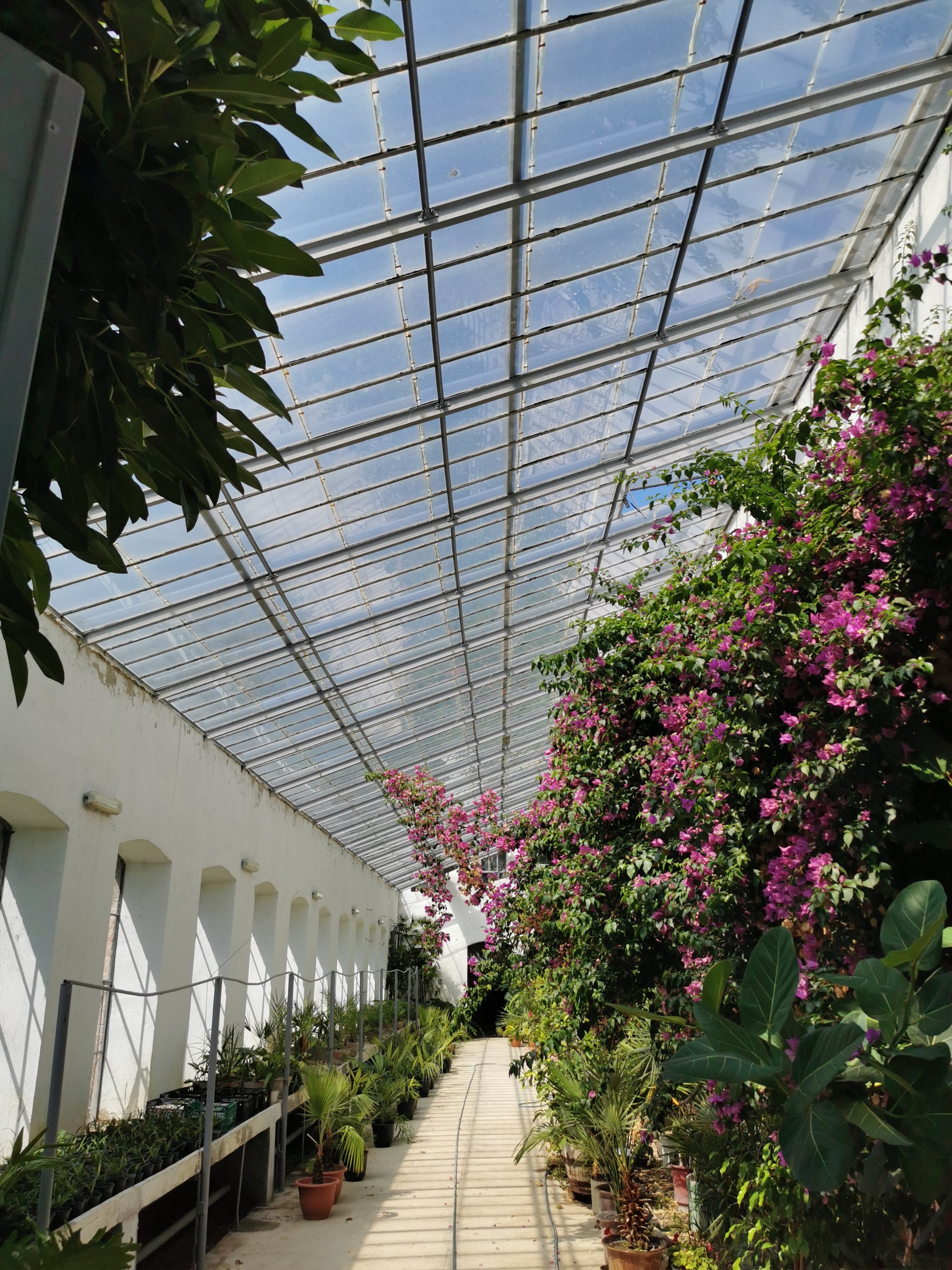
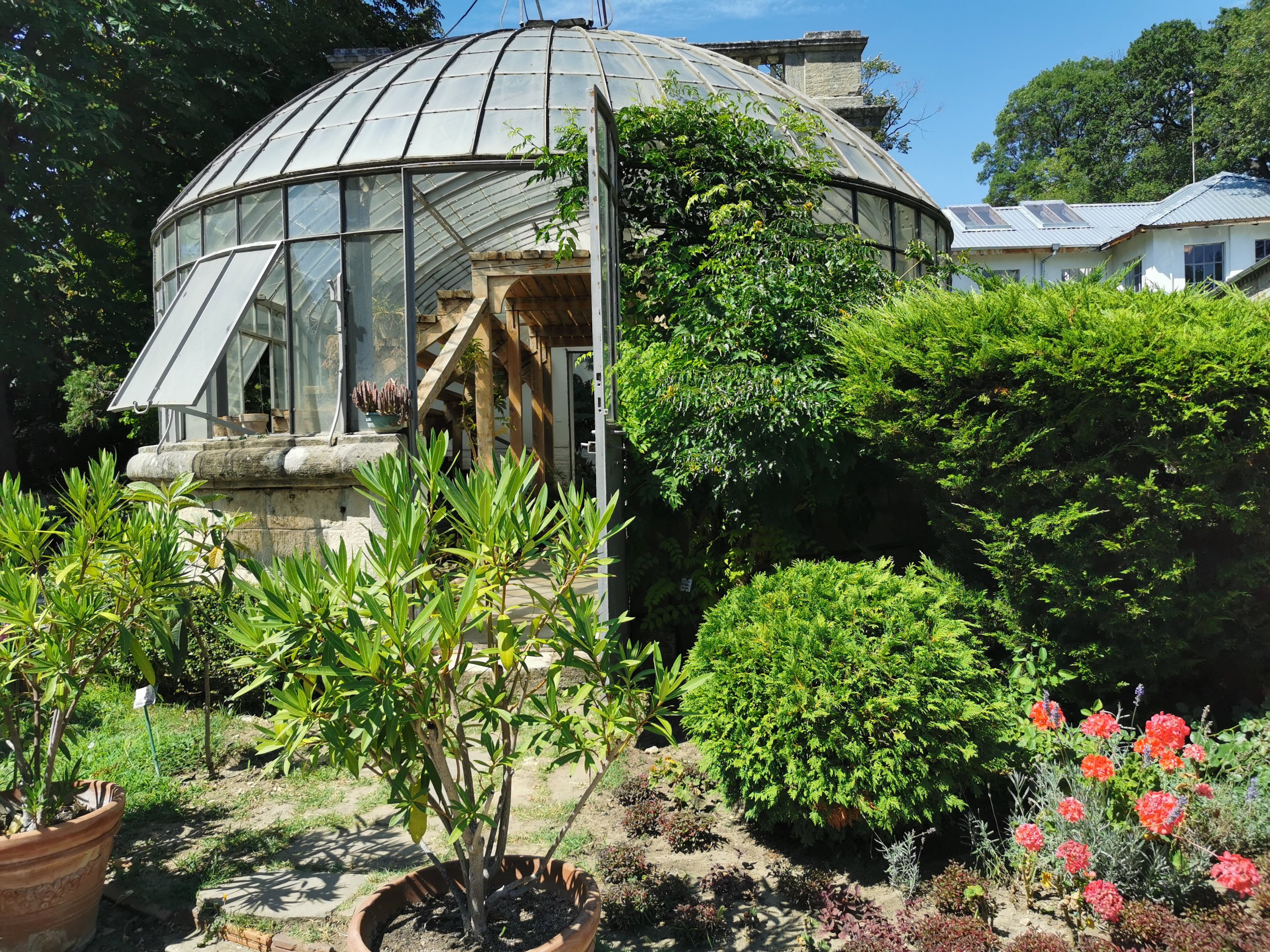
A glimpse of the park and the greenhouses
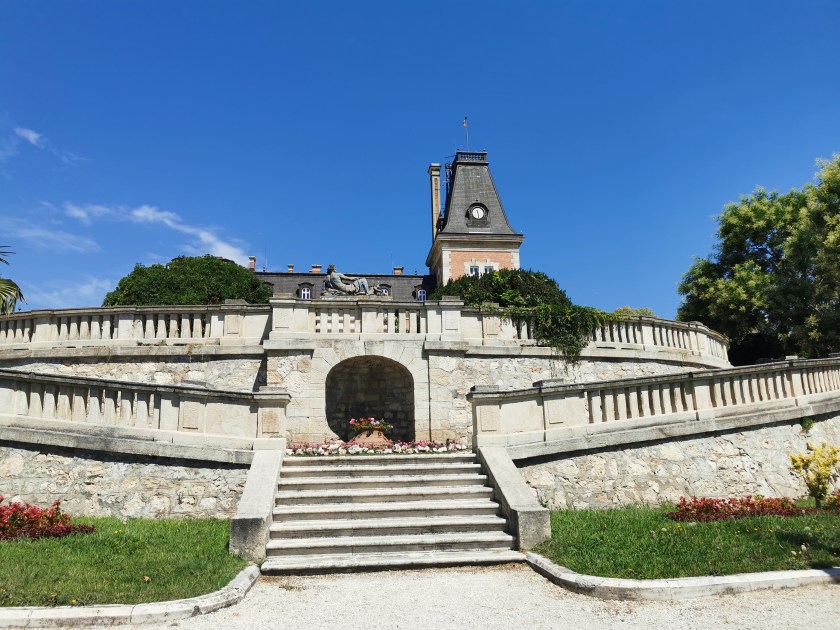
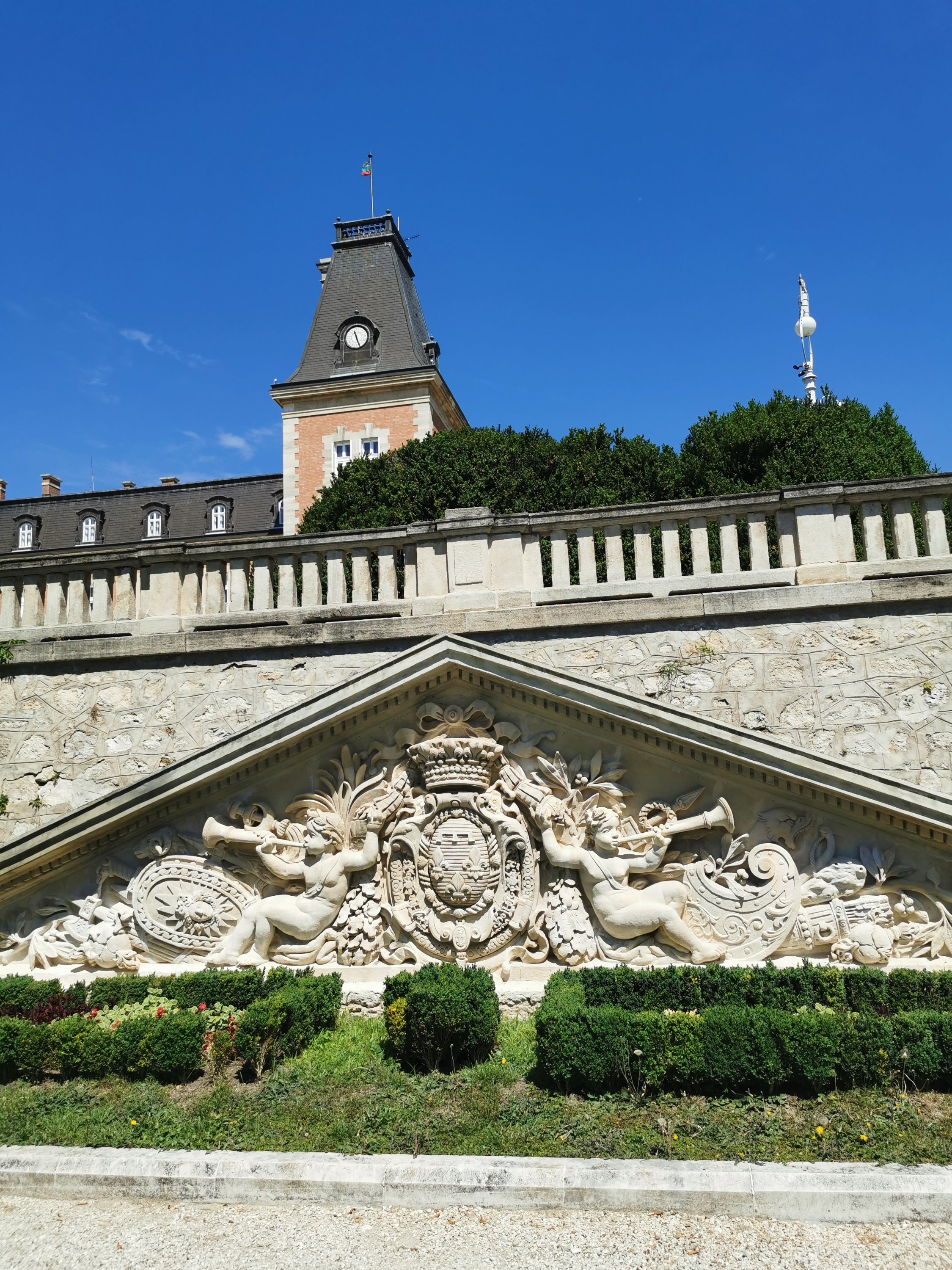
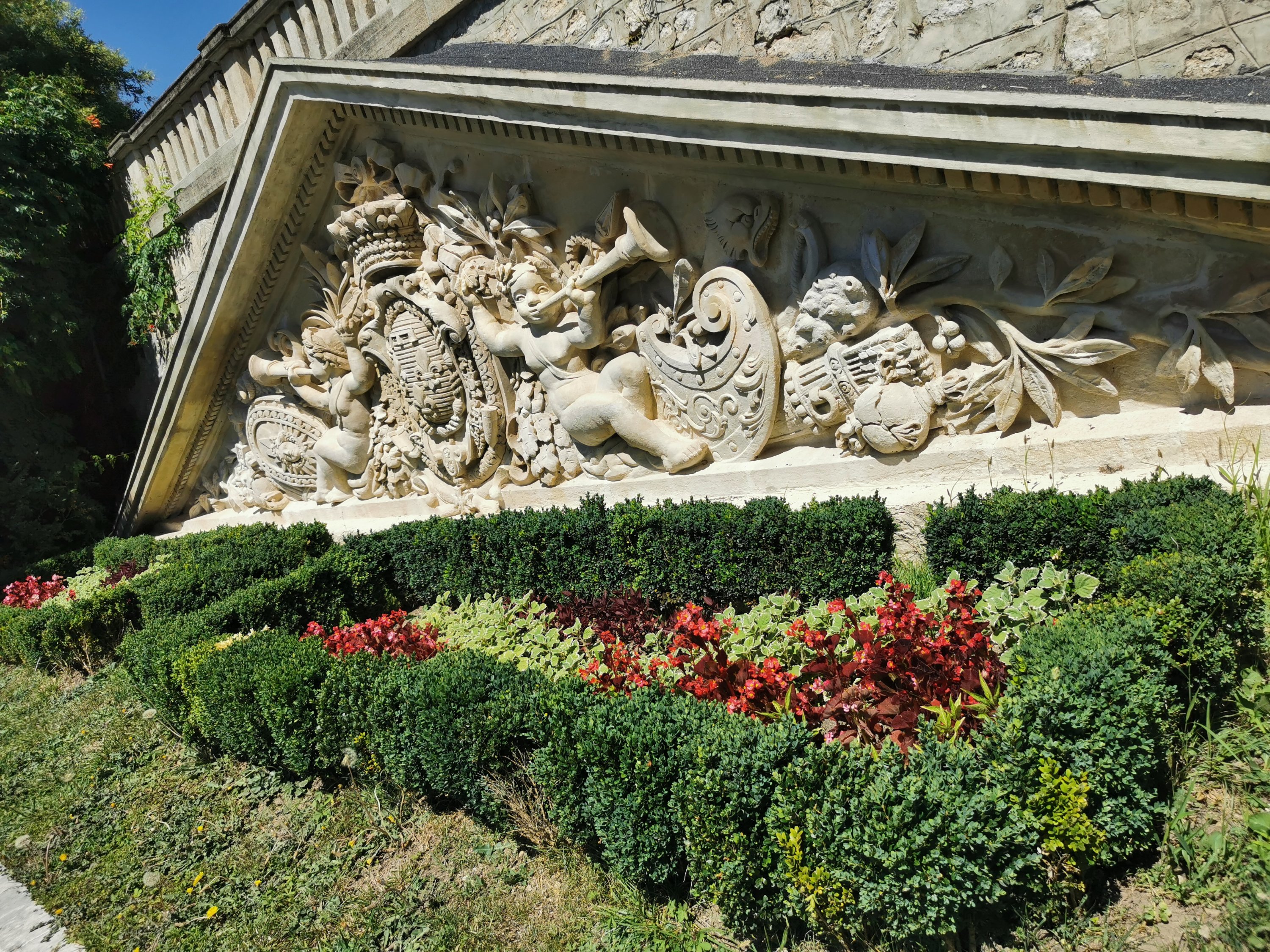
The palace, however, owes its current grandeur to Knyaz (later Tsar) Ferdinand. The pediment and other materials from the right wing of Château de Saint-Cloud in France, a former French royal residence, were brought to Bulgaria by Ferdinand and integrated into his new palace. As for the name – it came with the insistence of Princess Marie Louise, Ferdinand’s first wife. Euxinograd derives from the Ancient Greek term for the Black Sea, Εὔξεινος Πόντος (Euxeinos Pontos, “hospitable sea”) and the South Slavic suffix –grad, meaning “town” or, historically, “fortress”.***
The Euxinograd palace and the pediment from Château de Saint-Cloud
Following the abolition of the monarchy in Bulgaria, the result of a referendum held under the auspices of the Communists in 1946, Euxinograd became a summer residence of the then-Communist authorities. During that time a couple of new buildings were added to the complex, reflecting the architectural trends and insignia of different subperiods of Communist architecture and preferences of communist leaders.
The democratic changes in 1989 made the former royal palace a presidential and governmental residence and it was opened to the public.
If you skroll down this blog post by ?A you can see some photos of all the buildings around the complex. You will also get an idea of the facilities offered – a restaurant, a sports complex, a pool, a beach, a winery.
Although it’s open to the public though, there are a number of restrictions to exploring the complex. For example, if you just tour the castle, you would not see the lodging facilities. A few of the buildings are not accessible even if you are a guest of the complex (which takes a few months to get approval for). I guess, government officials want to keep their privacy after all, because there is even a wall to separate government officials from regular citizens.
The wall separating the beach for the government and for ordinary citizens**
There are three more remakable landmarks I find worth mentioning – one for the more spiritual types and one for the bohemian types.
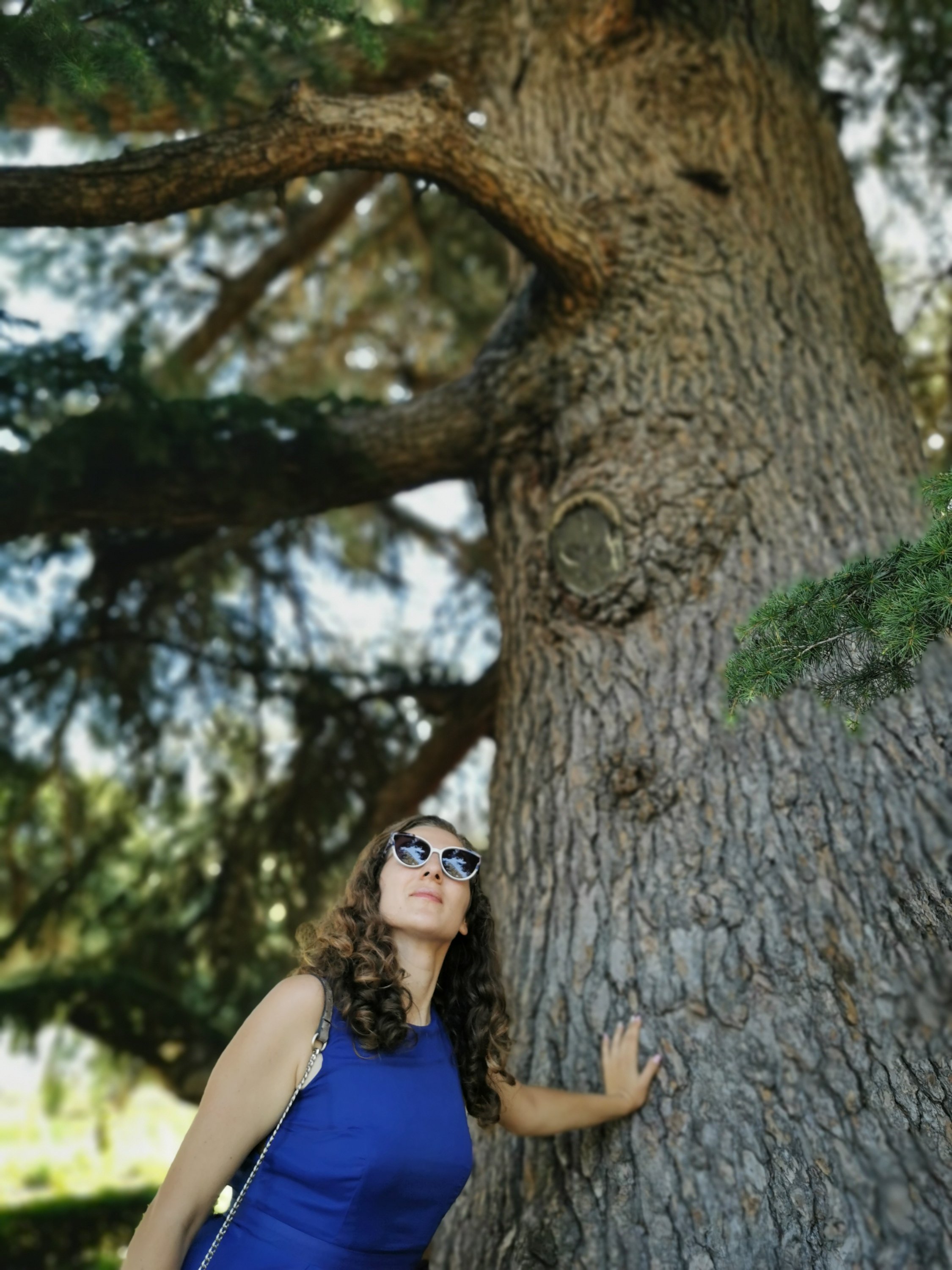
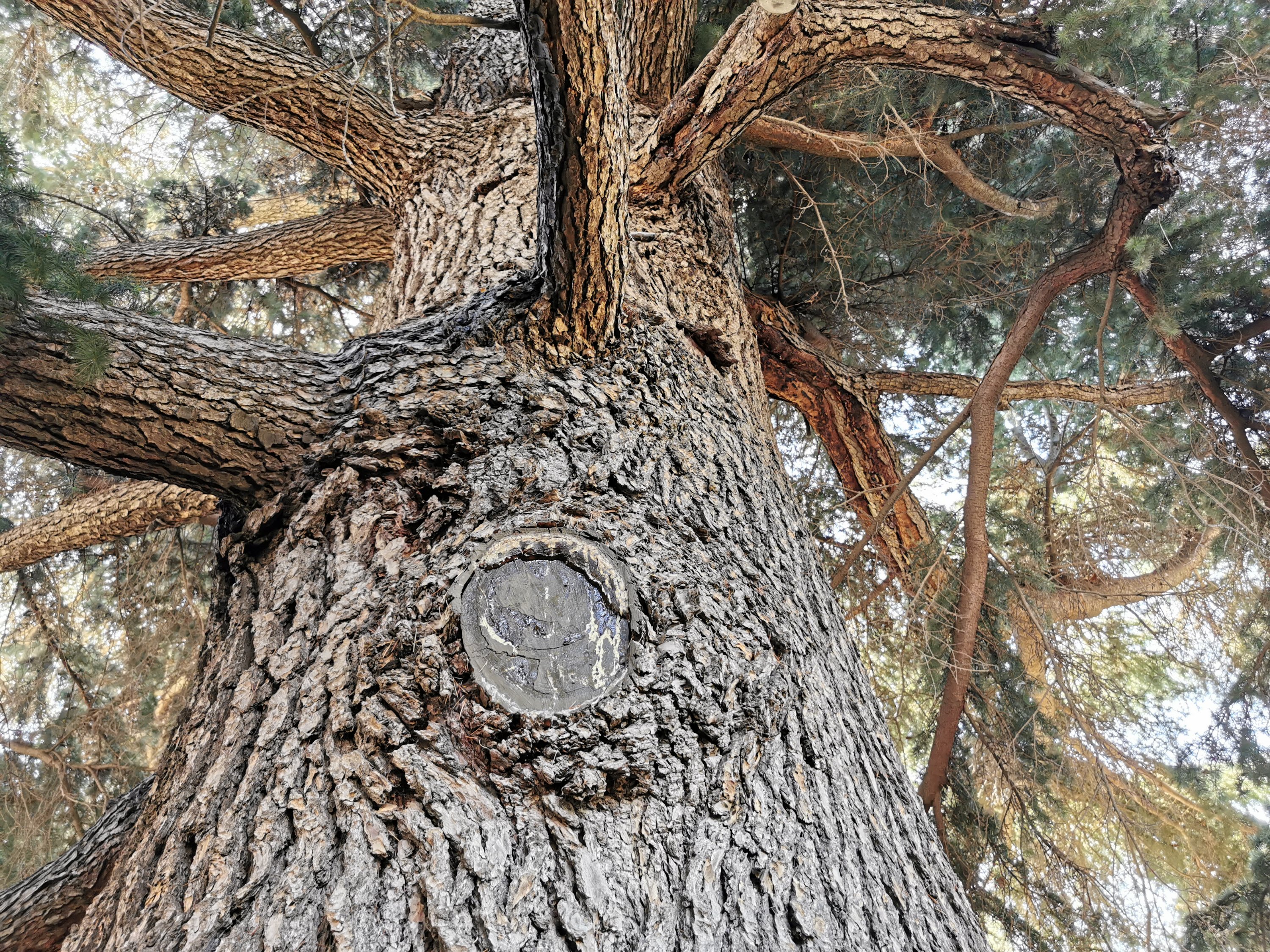
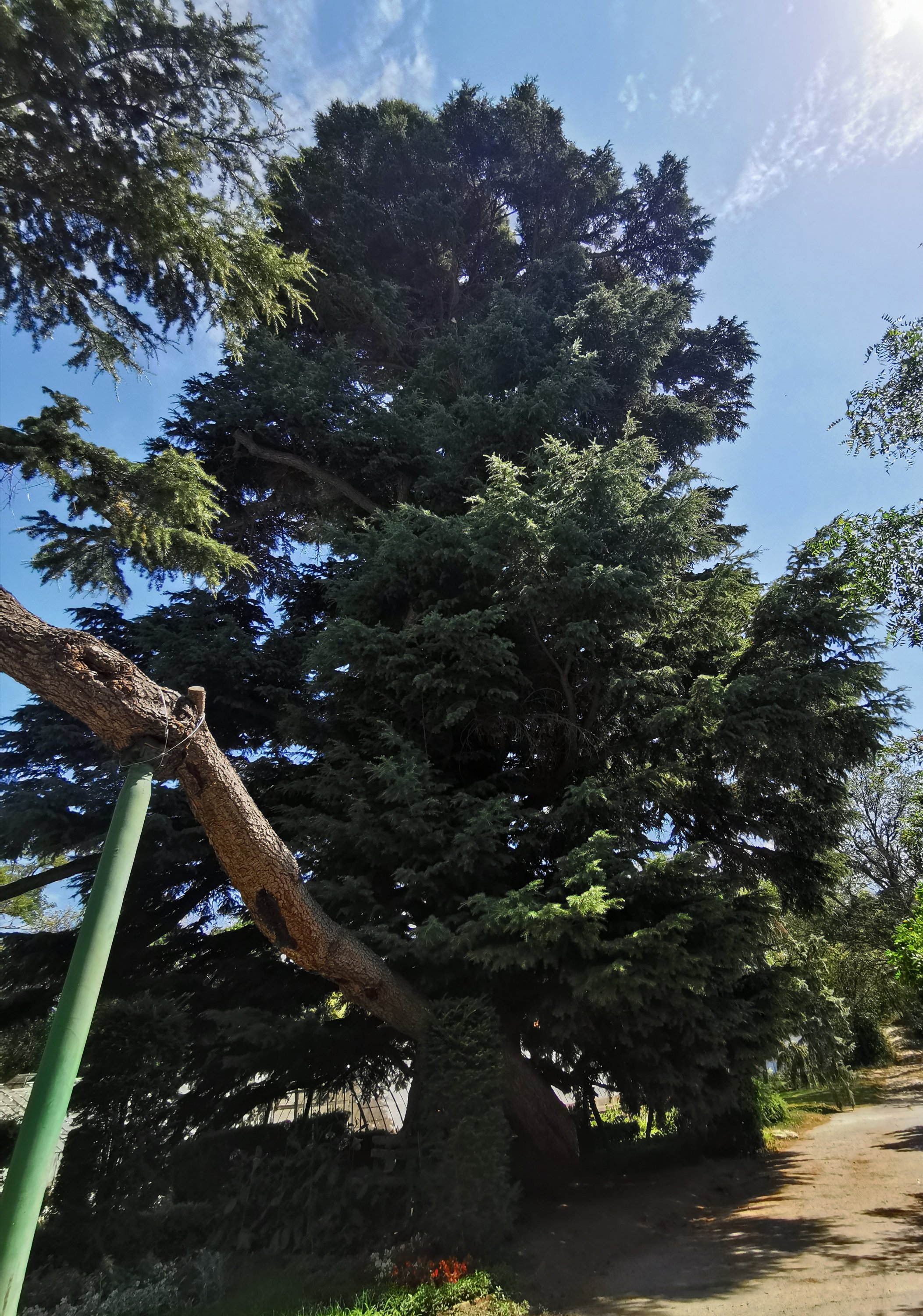
The first one is an enormous “Himalayan cedar” that is an almost 140- year-old tree. As other big old trees around the country, this one is also believed to hold some magical healing powers and special energy. For it to work, you need to touch it, hug it, or at best unite forces with a few other guests to embrace the whole 2-meter wide trunk. Even if you don’t believe in such stuff, this could provide for some guaranteed entertainment for you and your friends or family while attempting.
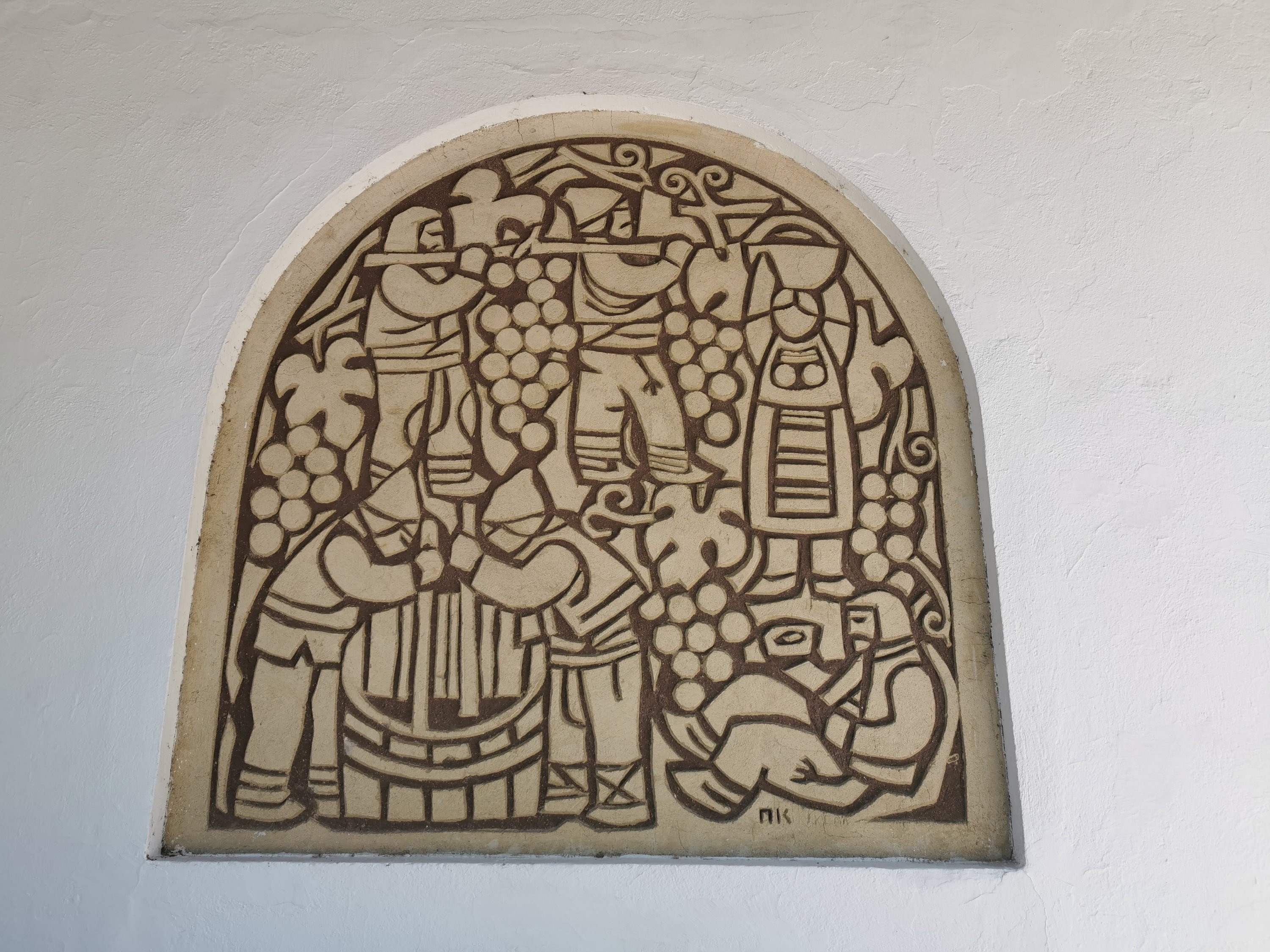
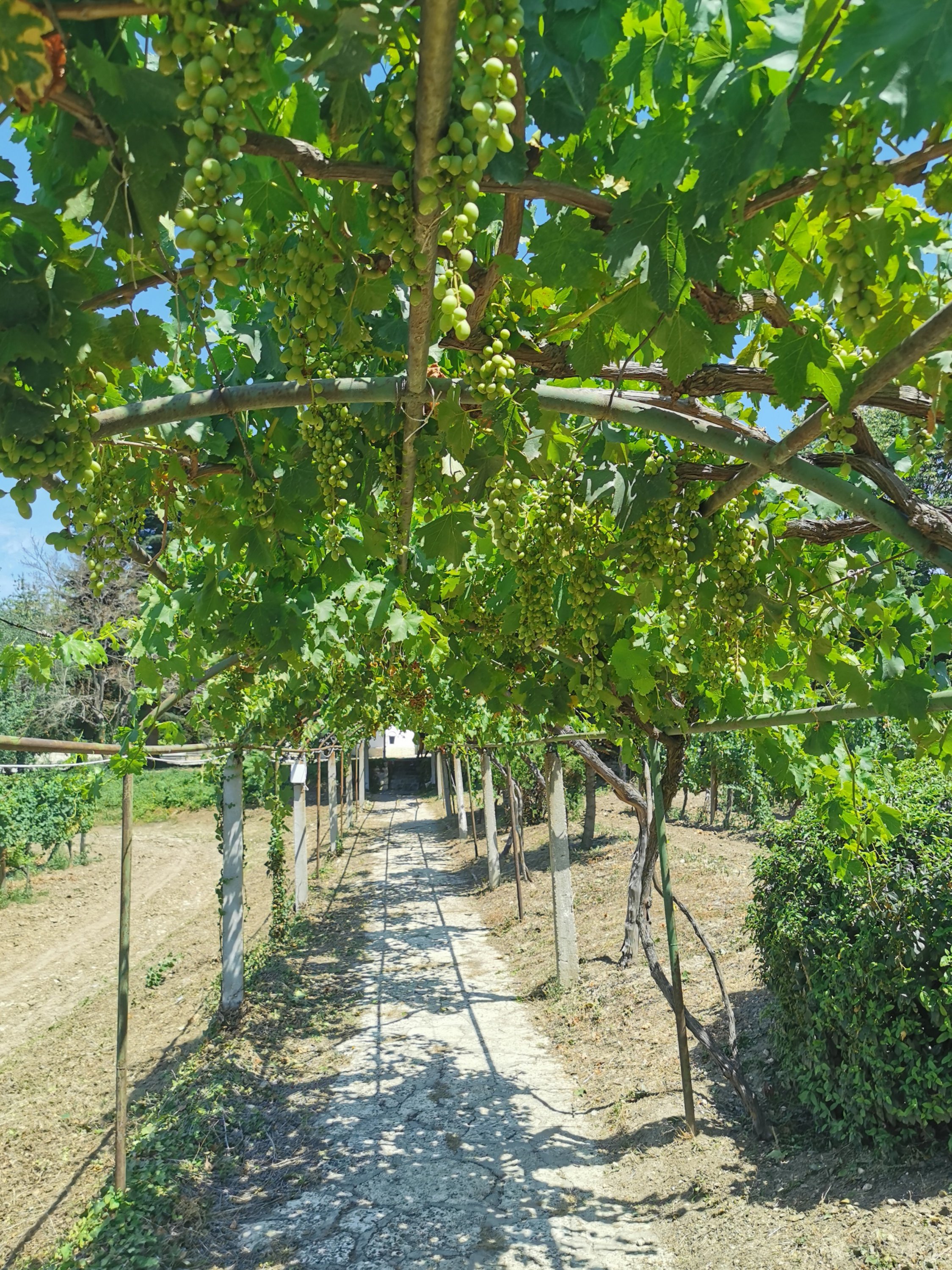
Last, but not least there is the winery – one of the oldest in the country. Here you can purchase some excellent wines as well as cognac matured in wine barrels. Cheers and hope you enjoy your visit as much as we did!
I decided to start the stories from our journey around the 100 National Tourist Sites of Bulgaria from the least known and least touristy place – the town of Malko Tarnovo.
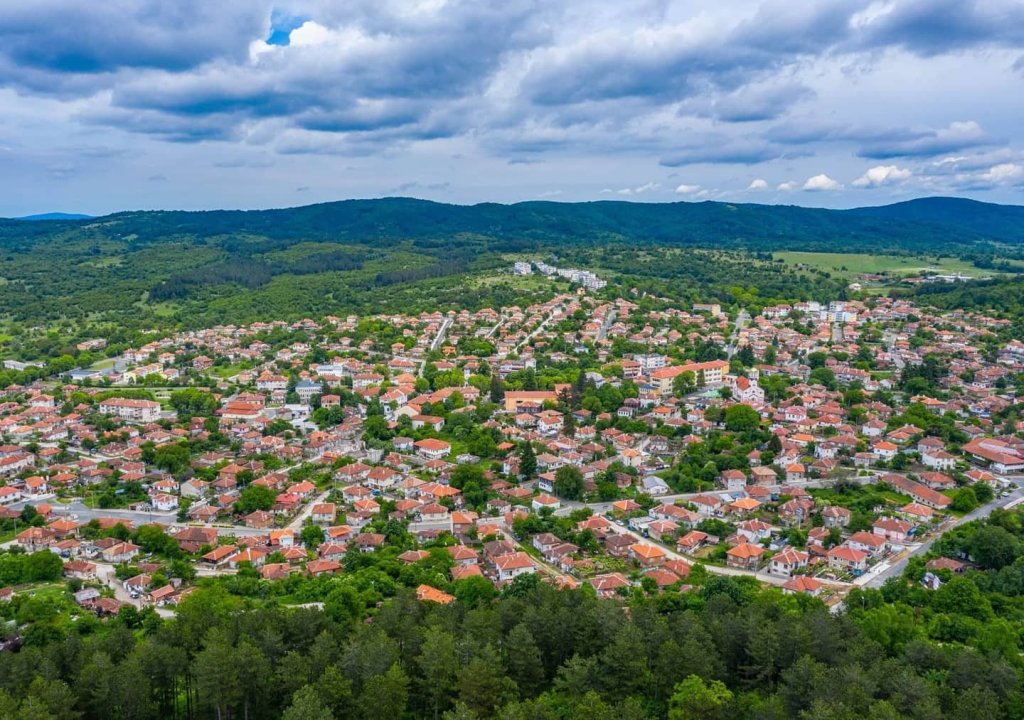
The town of Malko Tarnovo is located in the South East of Bulgaria – the only town in the interior of the Bulgarian Strandzha Mountains, located very close to the most controversial border of Bulgaria- the one with Turkey. In my family I had heard stories about the place, more or less dating back to the time of its heyday as Youth Republic of Communist Bulgaria – more or less the time when my dad was doing his military service in the area.
I first got to visit Malko Tarnovo at the age of 17, during one of my last summer breaks with my parents. Frankly, all I remember from that trip is the bad road, a turtle and a wild boar that crossed our way and a sleepy cafe in the central square. This said, you can imagine why my expectations were very low.
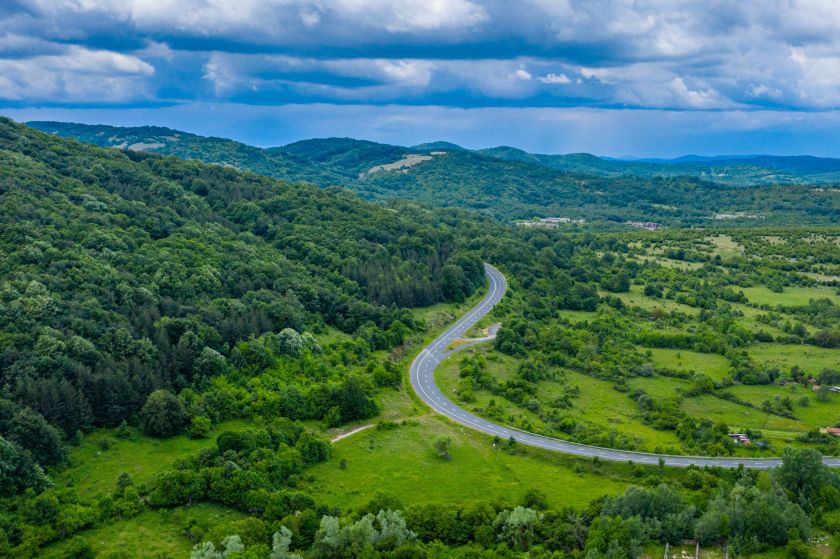
To my surprise, it turned out that there was a brand new road from Burgas reaching as far as the border crossing. So although we were pretty close – in Sinemorets (in air distance), we took the wise decision to follow the new road. Here I have to thank our friend the Kashkaval Tourist, whom we met by chance in Sinemorets and who recommended us to avoid the old road, despite it being lucratively closer to the shore. After Sozopol, the route went through a few villages and fields and then it was cozily surrounded by a thick Strandzha forest.
And there it was – Malko Tarnovo. You would think it bears resemblance with the old Bulgarian capital Veliko Tarnovo. Well, it doesn’t. The word Tarnovo comes from an old Slavic word for “fortress”. Also, there is no fortress nowadays, but it turned out there is surprisingly much to see in the town and around.
First, there is a nice new tourist info center, where you can get information in a few languages (and a stamp) about events and curious places and festivals to attend in the area (events take place mostly throughout summer) as well as some guidance on the working times of local museums. Also, here is the starting point for many exploration routes in the Strandzha Nature Park – the largest protected area in Bulgaria, established in 1995 to protect ecosystems and biodiversity of European importance, as well as the traditional cultural, historical and folklore heritage of the region.
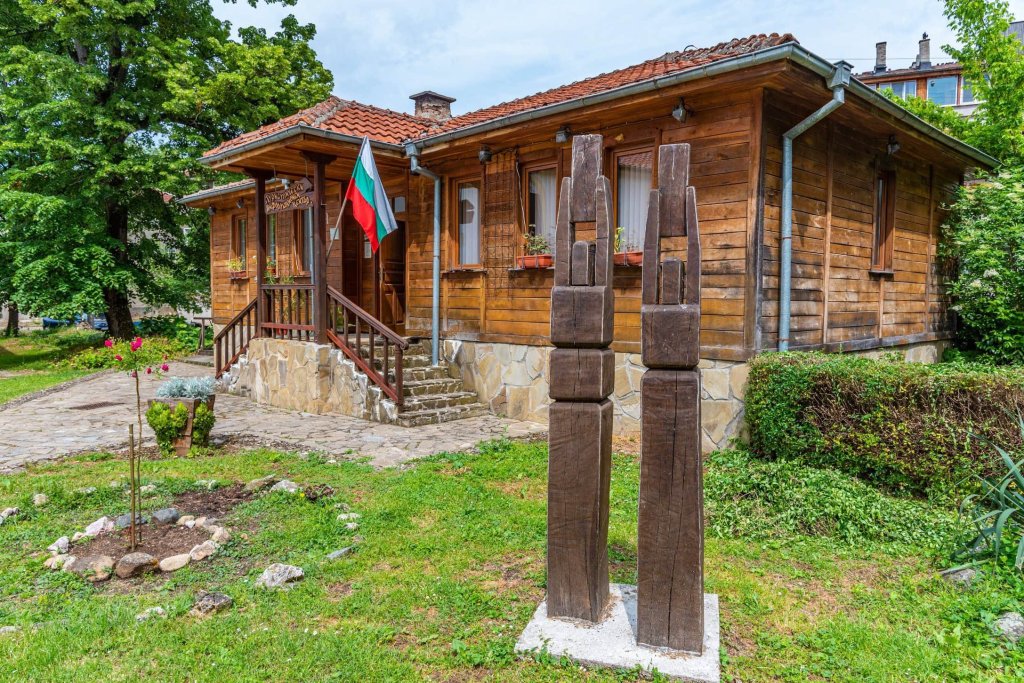
Unfortunately, due to the COVID-19 situation, most events in the mountains are not to take place in 2020. Also, the 3 museums (archaeological, historical and natural history) turned out to be closed for reconstructions, although, I stormed into one of them without realizing it. By August 2020 they should be open for visitors. The History Museum is seated in 3 really remarkable houses, typical for the Revival architecture in Strandzha, so at the very least we had a small glimpse of them.
It turned out there are two churches – an Orthodox one, built on the place of the oldest historically known to have existed here and a Roman-Catholic one, built on what seem to have been the base of an ancient shrine. In the latter one, you could find an icon of Virgin Mary as patron of the unity between Christians , which is believed to make miracles happen. The icon (brought from a Bulgarian church in nowadays Edrine) toured around Europe a century ago, coming back to its Bulgarian roots in Stara Zagora and then settling in Malko Tarnovo during the visit of Pope John Paul II, respected by Orthodox and Catholics alike.
Pavel and I certainly made the local mouth-to-mouth news, walking around with a big camera and a drone, and we got to talk to quite a few locals while trying to identify a place to eat. After a really delicious meal in one of the two small touristic complexes that were open in May (Bildnix Guesthouse), we went to the place we had decided to use as a remote office – the Motel Goat Horn.
Despite the initial confusion and the tricky location of the place on Google Maps, we managed to find it. The hotel is named after a pretty rough, but famous among Bulgarians 70s movie about the brutalities of Ottoman oppressors in 17th century Bulgaria. Interestingly, the movie (The Goat Horn) became somewhat of a blockbuster during the sexual oppression in Francoist Spain due to its shocking (for the time) nudity and violence.
Interior of the motel was really nothing special, but there was a nice big pool and it was so silent, I could hear my thoughts and the birds merrily singing in the woods that surrounded us. The balcony served as a perfect location for a busy working day in the new (to us) remote-work reality and the place was comfortably located for morning, lunchtime and after work short hikes.
But before I tell you more about the gems of Strandzha, let’s come back to the history of the town. The first settlement in the area of nowadays Malko Tarnovo was Thracian. Which is why the area is rich in tumuli, tombs, sanctuaries and other remnants of their civilization that keep puzzling both experts and enthusiasts with their elaborate stone structures, relations to cosmic bodies and natural cycles. Probably one of the most significant one is Mishkova Niva, which I will write about in a separate post (also a “stamp-site” under number 8).
The town itself was established around 16th/17th century and in the 19th century locals were mostly sheep- breeders and marble producers. During Ottoman times, local population was Bulgarian, mostly spread around in small shed-type settlements.
In the seventies it was already evident the region is quickly depopulating, due to a variety of reasons, ranging from poor infrastructure and lack of basic facilities to the strict regime of towns along this heavily protected border. So the Strandzha-Sakar program for speedy social-economic development was created, providing stimuli for young “Komsomol” families to move in these most underdeveloped regions. There was much hope and enthusiasm about that plan since young families received a financial stimulus, a cosmetics productuon factory was open and the Bulgarian Academy of Sciences established a branch of its Institute of Technical Cybernetics and Robotics. As many other well-intentioned plans of the planned economy, this one too fell flat and once a tech-hub-to-be Zvezdets (located right along the road) looks more like a scene from the beginning of Slumdog milliionare.
However, there is much hope and some stellar examples of summer revival of some of these villages located in the picturesque and mysterious Strandzha mountain. Stay tuned for more tips from the area.
As we embarked on a journey to explore the 100 National Tourist Sites in Bulgaria, we quickly realized there is no online map in English.
Pavel’s Bulgarian is very good, but museums in Bulgaria do have long names and for the non-native speaker it can really become a challenge when names seem kind of similar.
As solution-driven individuals, we used a similar Google map, made by the wonderful planinar.org and we updated and translated so it would be easier for any enthusiast to make a travel itinerary for a weekend, a week, or why not even longer.
It is a public map that you can share with absolutely anyone you feel like.
Enjoy you trip and drop us a line!
100 National Tourist Sites is a movement of the Bulgarian Tourist Association that promotes places of significance in the country.
 Never have I ever