I decided to start the stories from our journey around the 100 National Tourist Sites of Bulgaria from the least known and least touristy place – the town of Malko Tarnovo.
The town of Malko Tarnovo is located in the South East of Bulgaria – the only town in the interior of the Bulgarian Strandzha Mountains, located very close to the most controversial border of Bulgaria- the one with Turkey. In my family I had heard stories about the place, more or less dating back to the time of its heyday as Youth Republic of Communist Bulgaria – more or less the time when my dad was doing his military service in the area.
I first got to visit Malko Tarnovo at the age of 17, during one of my last summer breaks with my parents. Frankly, all I remember from that trip is the bad road, a turtle and a wild boar that crossed our way and a sleepy cafe in the central square. This said, you can imagine why my expectations were very low.
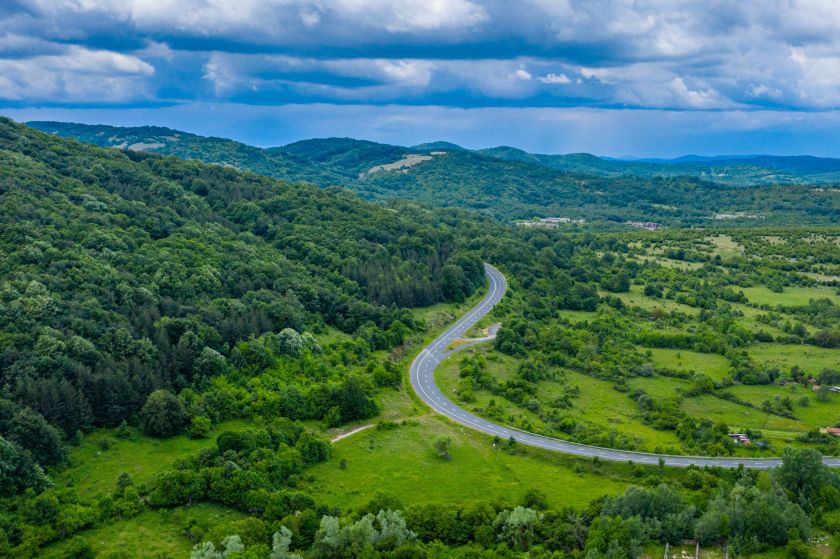
To my surprise, it turned out that there was a brand new road from Burgas reaching as far as the border crossing. So although we were pretty close – in Sinemorets (in air distance), we took the wise decision to follow the new road. Here I have to thank our friend the Kashkaval Tourist, whom we met by chance in Sinemorets and who recommended us to avoid the old road, despite it being lucratively closer to the shore. After Sozopol, the route went through a few villages and fields and then it was cozily surrounded by a thick Strandzha forest.
And there it was – Malko Tarnovo. You would think it bears resemblance with the old Bulgarian capital Veliko Tarnovo. Well, it doesn’t. The word Tarnovo comes from an old Slavic word for “fortress”. Also, there is no fortress nowadays, but it turned out there is surprisingly much to see in the town and around.
First, there is a nice new tourist info center, where you can get information in a few languages (and a stamp) about events and curious places and festivals to attend in the area (events take place mostly throughout summer) as well as some guidance on the working times of local museums. Also, here is the starting point for many exploration routes in the Strandzha Nature Park – the largest protected area in Bulgaria, established in 1995 to protect ecosystems and biodiversity of European importance, as well as the traditional cultural, historical and folklore heritage of the region.
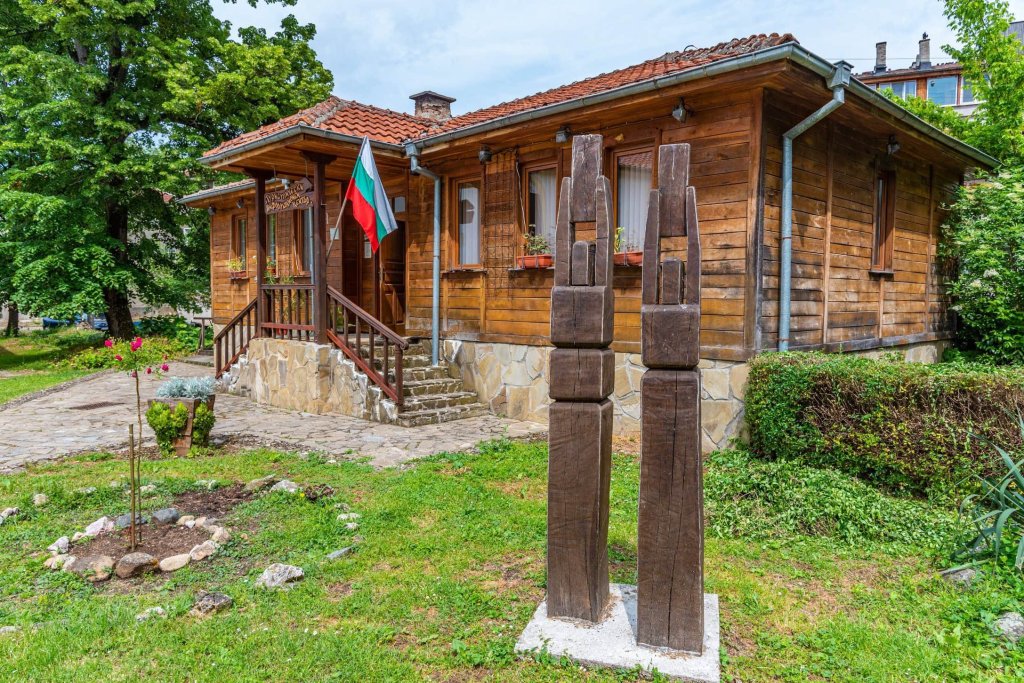
Unfortunately, due to the COVID-19 situation, most events in the mountains are not to take place in 2020. Also, the 3 museums (archaeological, historical and natural history) turned out to be closed for reconstructions, although, I stormed into one of them without realizing it. By August 2020 they should be open for visitors. The History Museum is seated in 3 really remarkable houses, typical for the Revival architecture in Strandzha, so at the very least we had a small glimpse of them.
It turned out there are two churches – an Orthodox one, built on the place of the oldest historically known to have existed here and a Roman-Catholic one, built on what seem to have been the base of an ancient shrine. In the latter one, you could find an icon of Virgin Mary as patron of the unity between Christians , which is believed to make miracles happen. The icon (brought from a Bulgarian church in nowadays Edrine) toured around Europe a century ago, coming back to its Bulgarian roots in Stara Zagora and then settling in Malko Tarnovo during the visit of Pope John Paul II, respected by Orthodox and Catholics alike.
Pavel and I certainly made the local mouth-to-mouth news, walking around with a big camera and a drone, and we got to talk to quite a few locals while trying to identify a place to eat. After a really delicious meal in one of the two small touristic complexes that were open in May (Bildnix Guesthouse), we went to the place we had decided to use as a remote office – the Motel Goat Horn.
Despite the initial confusion and the tricky location of the place on Google Maps, we managed to find it. The hotel is named after a pretty rough, but famous among Bulgarians 70s movie about the brutalities of Ottoman oppressors in 17th century Bulgaria. Interestingly, the movie (The Goat Horn) became somewhat of a blockbuster during the sexual oppression in Francoist Spain due to its shocking (for the time) nudity and violence.
Interior of the motel was really nothing special, but there was a nice big pool and it was so silent, I could hear my thoughts and the birds merrily singing in the woods that surrounded us. The balcony served as a perfect location for a busy working day in the new (to us) remote-work reality and the place was comfortably located for morning, lunchtime and after work short hikes.
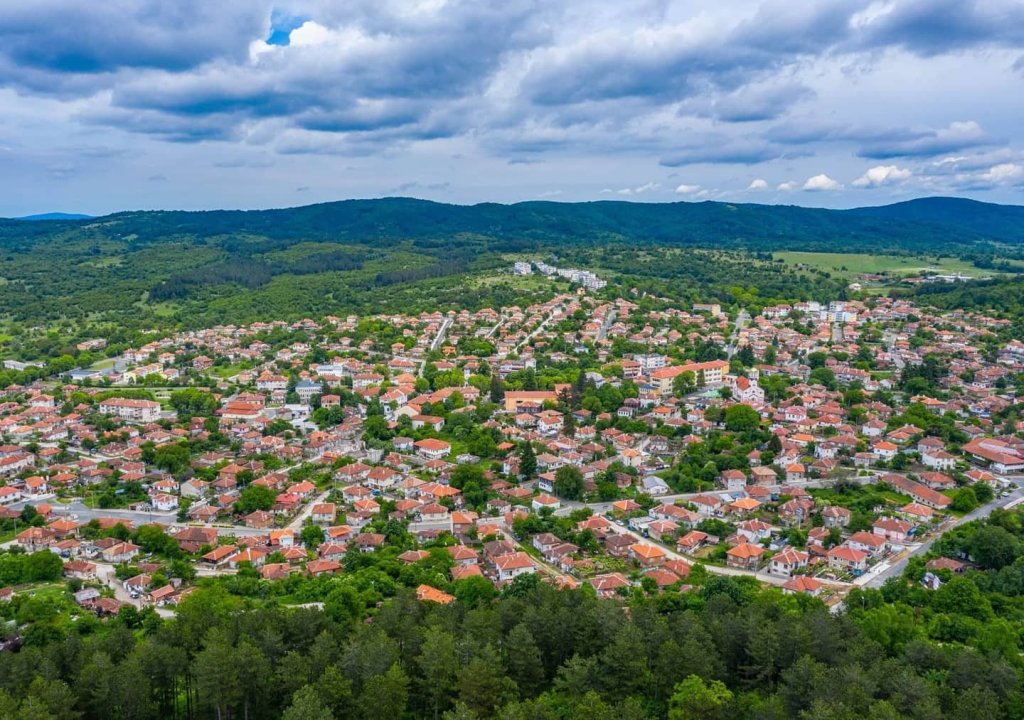
But before I tell you more about the gems of Strandzha, let’s come back to the history of the town. The first settlement in the area of nowadays Malko Tarnovo was Thracian. Which is why the area is rich in tumuli, tombs, sanctuaries and other remnants of their civilization that keep puzzling both experts and enthusiasts with their elaborate stone structures, relations to cosmic bodies and natural cycles. Probably one of the most significant one is Mishkova Niva, which I will write about in a separate post (also a “stamp-site” under number 8).
The town itself was established around 16th/17th century and in the 19th century locals were mostly sheep- breeders and marble producers. During Ottoman times, local population was Bulgarian, mostly spread around in small shed-type settlements.
In the seventies it was already evident the region is quickly depopulating, due to a variety of reasons, ranging from poor infrastructure and lack of basic facilities to the strict regime of towns along this heavily protected border. So the Strandzha-Sakar program for speedy social-economic development was created, providing stimuli for young “Komsomol” families to move in these most underdeveloped regions. There was much hope and enthusiasm about that plan since young families received a financial stimulus, a cosmetics productuon factory was open and the Bulgarian Academy of Sciences established a branch of its Institute of Technical Cybernetics and Robotics. As many other well-intentioned plans of the planned economy, this one too fell flat and once a tech-hub-to-be Zvezdets (located right along the road) looks more like a scene from the beginning of Slumdog milliionare.
However, there is much hope and some stellar examples of summer revival of some of these villages located in the picturesque and mysterious Strandzha mountain. Stay tuned for more tips from the area.
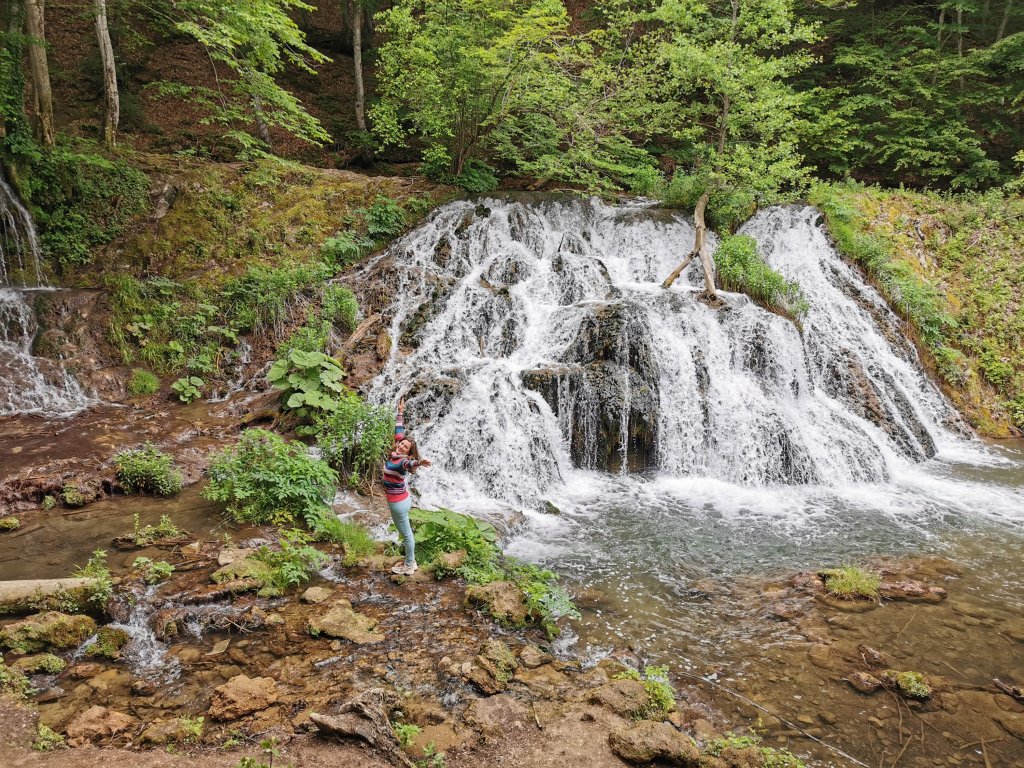
In the meantime, here is a photo for motivation.
 Never have I ever