Are you planning a trip from Sofia to Varna or vice versa?
Your options are to travel with your own car (if you have one), a shared ride (might not be the safest), a bus (that feels like an infinity), or by train.
Contrary to popular belief amongst most Bulgarians, a train ride might be the most enjoyable, relaxing and least stressful.
Here is the time to make a disclaimer. I would recommend the train ride only if you chose the “fast” overnight train in a sleeping compartment. Otherwise, some if these rides take a bit too much time to enjoy being confined to a seat.
The sleeping wagons are probably the newest in the Bulgarian railway and very nicely maintained. It is the closest you could get to a Western European experience in a Bulgarian train.
In the current situation with COVID-19, having the compartment only for myself was quite comforting and allowed me to fully relax and sleep like a baby through the whole ride from Sofia to Varna.
There are a few options to chose from. You could either share the compartment with one or two people, or pay the extra few leva (BGN) for the so-called business class which in essence is the same compartment only at your disposal.
There is a sink and a luggage hanger in each comparment. But beware there is no storage available for big pieces of luggage.
Sleeping compartment in the fast train between Sofia and Varna
Bathrooms are shared, but quite neat and frequently cleaned.
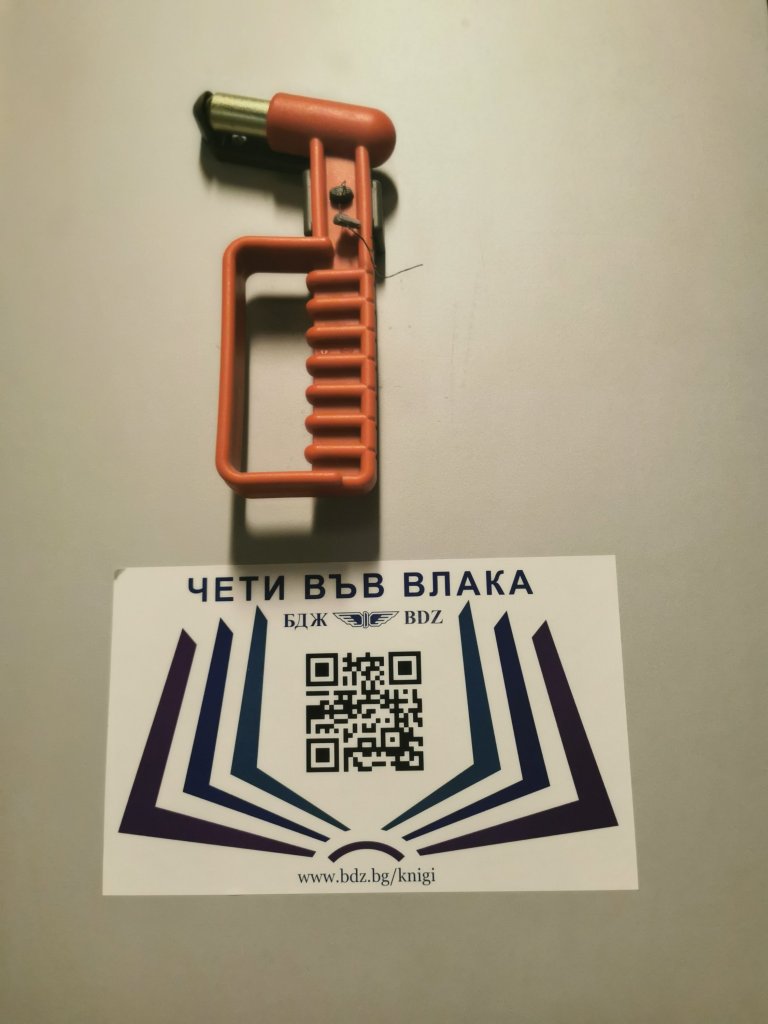
A nice surprise was this initiative to promote reading(unfortunately only publications in Bulgarian available at the time).
Books available online for anyone interested
Note: If you are traveling during the touristic season on the Bulgarian Blacksea coast, make sure to book in advance through the website of the Bulgarian railway.
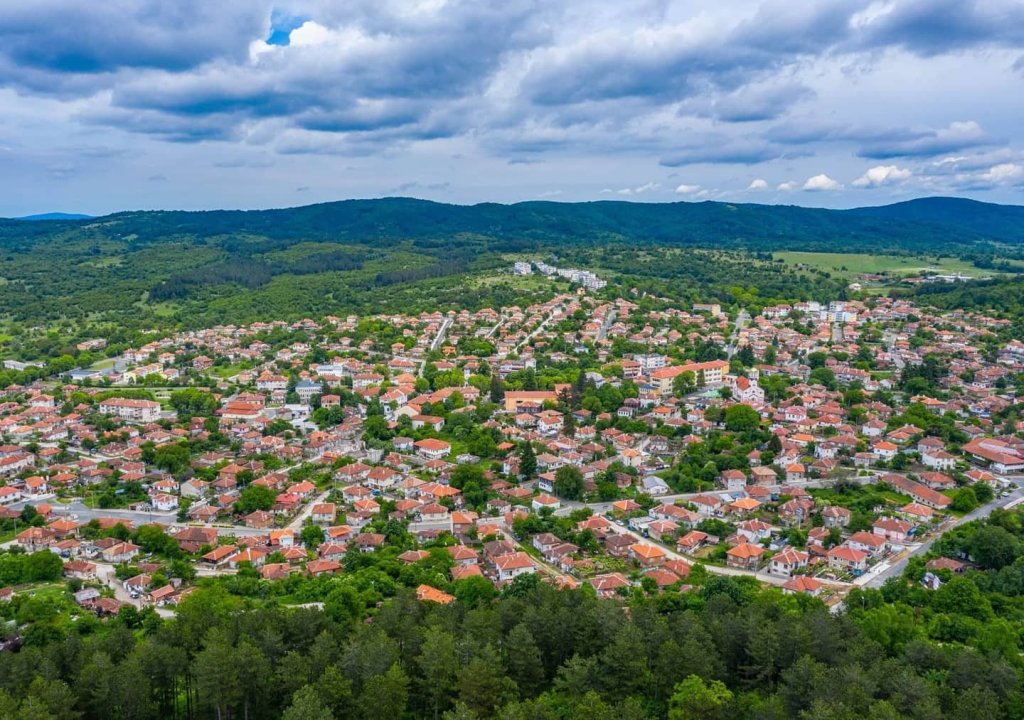
I decided to start the stories from our journey around the 100 National Tourist Sites of Bulgaria from the least known and least touristy place – the town of Malko Tarnovo.
The town of Malko Tarnovo is located in the South East of Bulgaria – the only town in the interior of the Bulgarian Strandzha Mountains, located very close to the most controversial border of Bulgaria- the one with Turkey. In my family I had heard stories about the place, more or less dating back to the time of its heyday as Youth Republic of Communist Bulgaria – more or less the time when my dad was doing his military service in the area.
I first got to visit Malko Tarnovo at the age of 17, during one of my last summer breaks with my parents. Frankly, all I remember from that trip is the bad road, a turtle and a wild boar that crossed our way and a sleepy cafe in the central square. This said, you can imagine why my expectations were very low.
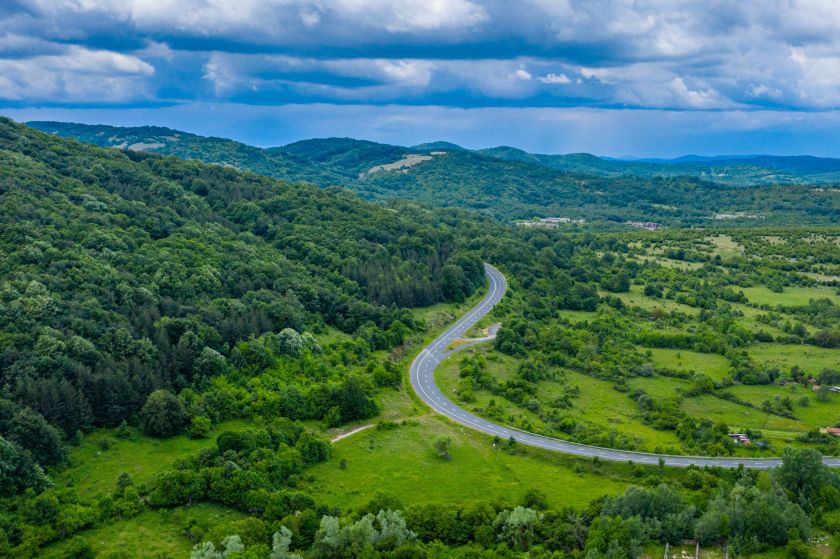
To my surprise, it turned out that there was a brand new road from Burgas reaching as far as the border crossing. So although we were pretty close – in Sinemorets (in air distance), we took the wise decision to follow the new road. Here I have to thank our friend the Kashkaval Tourist, whom we met by chance in Sinemorets and who recommended us to avoid the old road, despite it being lucratively closer to the shore. After Sozopol, the route went through a few villages and fields and then it was cozily surrounded by a thick Strandzha forest.
And there it was – Malko Tarnovo. You would think it bears resemblance with the old Bulgarian capital Veliko Tarnovo. Well, it doesn’t. The word Tarnovo comes from an old Slavic word for “fortress”. Also, there is no fortress nowadays, but it turned out there is surprisingly much to see in the town and around.
First, there is a nice new tourist info center, where you can get information in a few languages (and a stamp) about events and curious places and festivals to attend in the area (events take place mostly throughout summer) as well as some guidance on the working times of local museums. Also, here is the starting point for many exploration routes in the Strandzha Nature Park – the largest protected area in Bulgaria, established in 1995 to protect ecosystems and biodiversity of European importance, as well as the traditional cultural, historical and folklore heritage of the region.
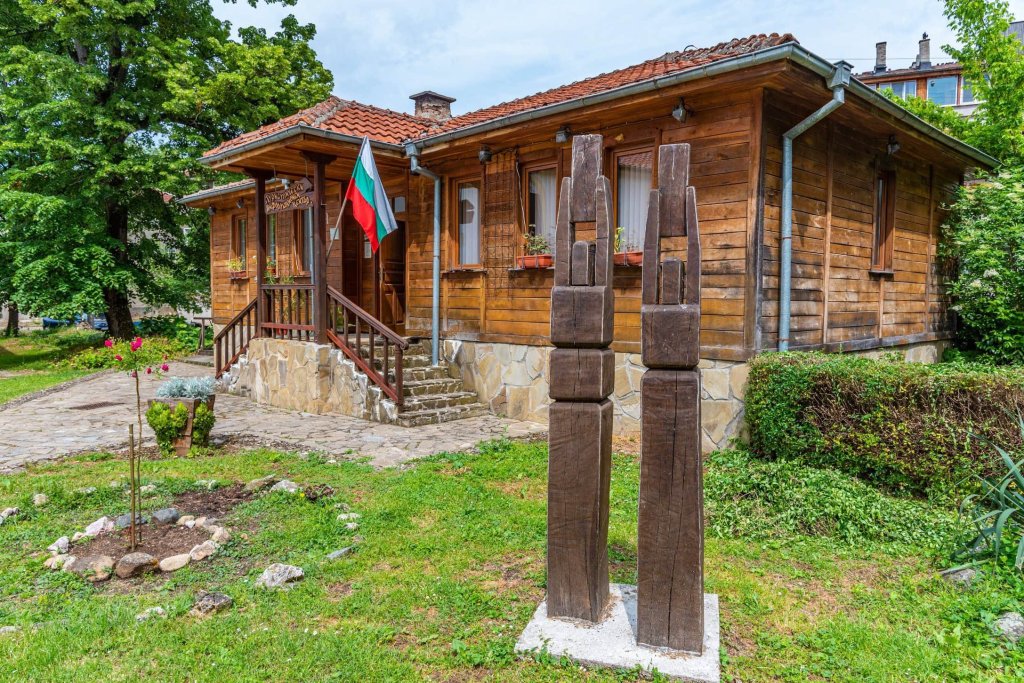
Unfortunately, due to the COVID-19 situation, most events in the mountains are not to take place in 2020. Also, the 3 museums (archaeological, historical and natural history) turned out to be closed for reconstructions, although, I stormed into one of them without realizing it. By August 2020 they should be open for visitors. The History Museum is seated in 3 really remarkable houses, typical for the Revival architecture in Strandzha, so at the very least we had a small glimpse of them.
It turned out there are two churches – an Orthodox one, built on the place of the oldest historically known to have existed here and a Roman-Catholic one, built on what seem to have been the base of an ancient shrine. In the latter one, you could find an icon of Virgin Mary as patron of the unity between Christians , which is believed to make miracles happen. The icon (brought from a Bulgarian church in nowadays Edrine) toured around Europe a century ago, coming back to its Bulgarian roots in Stara Zagora and then settling in Malko Tarnovo during the visit of Pope John Paul II, respected by Orthodox and Catholics alike.
Pavel and I certainly made the local mouth-to-mouth news, walking around with a big camera and a drone, and we got to talk to quite a few locals while trying to identify a place to eat. After a really delicious meal in one of the two small touristic complexes that were open in May (Bildnix Guesthouse), we went to the place we had decided to use as a remote office – the Motel Goat Horn.
Despite the initial confusion and the tricky location of the place on Google Maps, we managed to find it. The hotel is named after a pretty rough, but famous among Bulgarians 70s movie about the brutalities of Ottoman oppressors in 17th century Bulgaria. Interestingly, the movie (The Goat Horn) became somewhat of a blockbuster during the sexual oppression in Francoist Spain due to its shocking (for the time) nudity and violence.
Interior of the motel was really nothing special, but there was a nice big pool and it was so silent, I could hear my thoughts and the birds merrily singing in the woods that surrounded us. The balcony served as a perfect location for a busy working day in the new (to us) remote-work reality and the place was comfortably located for morning, lunchtime and after work short hikes.
But before I tell you more about the gems of Strandzha, let’s come back to the history of the town. The first settlement in the area of nowadays Malko Tarnovo was Thracian. Which is why the area is rich in tumuli, tombs, sanctuaries and other remnants of their civilization that keep puzzling both experts and enthusiasts with their elaborate stone structures, relations to cosmic bodies and natural cycles. Probably one of the most significant one is Mishkova Niva, which I will write about in a separate post (also a “stamp-site” under number 8).
The town itself was established around 16th/17th century and in the 19th century locals were mostly sheep- breeders and marble producers. During Ottoman times, local population was Bulgarian, mostly spread around in small shed-type settlements.
In the seventies it was already evident the region is quickly depopulating, due to a variety of reasons, ranging from poor infrastructure and lack of basic facilities to the strict regime of towns along this heavily protected border. So the Strandzha-Sakar program for speedy social-economic development was created, providing stimuli for young “Komsomol” families to move in these most underdeveloped regions. There was much hope and enthusiasm about that plan since young families received a financial stimulus, a cosmetics productuon factory was open and the Bulgarian Academy of Sciences established a branch of its Institute of Technical Cybernetics and Robotics. As many other well-intentioned plans of the planned economy, this one too fell flat and once a tech-hub-to-be Zvezdets (located right along the road) looks more like a scene from the beginning of Slumdog milliionare.
However, there is much hope and some stellar examples of summer revival of some of these villages located in the picturesque and mysterious Strandzha mountain. Stay tuned for more tips from the area.
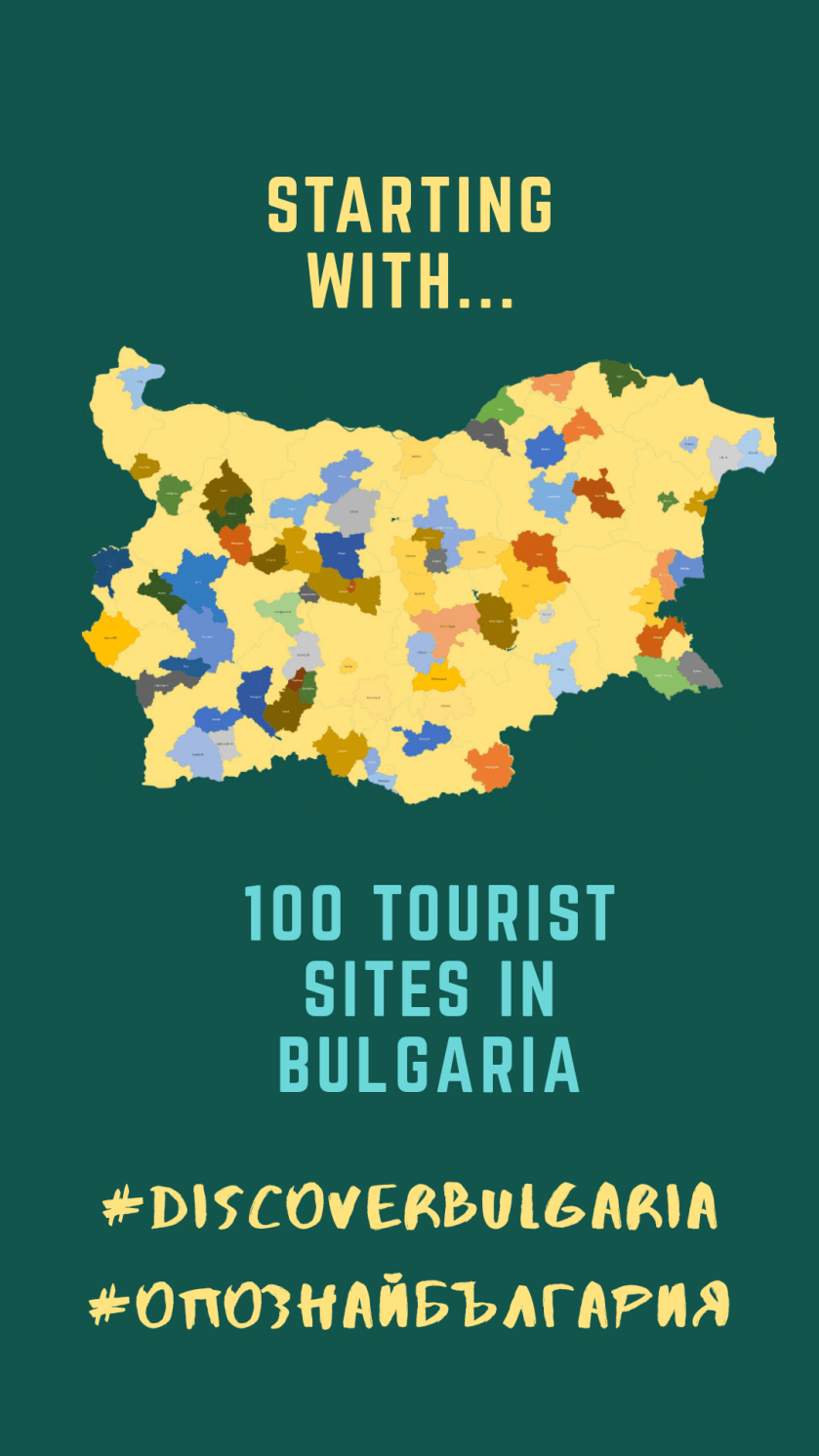
As we embarked on a journey to explore the 100 National Tourist Sites in Bulgaria, we quickly realized there is no online map in English.
Pavel’s Bulgarian is very good, but museums in Bulgaria do have long names and for the non-native speaker it can really become a challenge when names seem kind of similar.
As solution-driven individuals, we used a similar Google map, made by the wonderful planinar.org and we updated and translated so it would be easier for any enthusiast to make a travel itinerary for a weekend, a week, or why not even longer.
It is a public map that you can share with absolutely anyone you feel like.
Enjoy you trip and drop us a line!
100 National Tourist Sites is a movement of the Bulgarian Tourist Association that promotes places of significance in the country.
Easter has always been my favorite family celebration throughout the year. Unlike Christmas, it is at the time of the year when it is actually quite enjoyable to stay outside and maybe even do a picnic, or a short hike in nature. It’s a day that brings the family together….The family brings A LOT of food. And there are some pretty cool traditions prior and during the Holy Week.
So, as I said, I am Bulgarian and as the majority of Christians in my country, I am Orthodox (or at least christened as such). Why this is important? Well, it is because ever since the East–West Schism of the 11th century (!) the two churches follow different calendars. Also, the dates of big Christian celebrations are determined in a slightly different way. To add an extra layer of confusion in the mix, since all Orthodox church branches are autocephalous, they do not have a head that unites and leads them all (such as the Pope). Due to all of the above reasons, in my home country (as well as in Greece) we ended up celebrating Christmas (which was kind of forbidden in the socialist regime) on the 25th of December like everyone in the Catholic world (and unlike most of the Orthodox one) and Easter on the movable date, which is the same for all Orthodox Christians every year.
Already confused? I don’t blame you. The point is that in the end, in most years for Orthodox Easter is at different times than for other Christians (both Catholic and Protestant).
So for most part of my last 12 years living in and out of my country (mostly in Western Europe) and the last 6, actually living (for the most part) with my Catholic-christened partner, I have had a double Easter every year, except in the rare occasions when the 2 coincided ( which happens roughly every 3 to 8 years).
That’s a lot of Easter celebrations indeed. But it has always been quite exciting for me to experience various funny traditions in other countries.
Like in Finland, where they have bonfires and other rites of spring- related traditions.
Or in Czech Republic and Slovakia, where they have this decorated willow whip-like twig bundle, which is thought to bring health and youth to anyone who is whipped with them. In Slovakia they even take it to the next level where men chase around women to pour water over them.
In Austria there is a mix of the Eastern and Western traditions (let’s be honest- most of those have nothing to do with Christianity) and the all the types of Easter eggs out there- from the decorative blown-out one, to the chocolate ones and the one for “pecking”
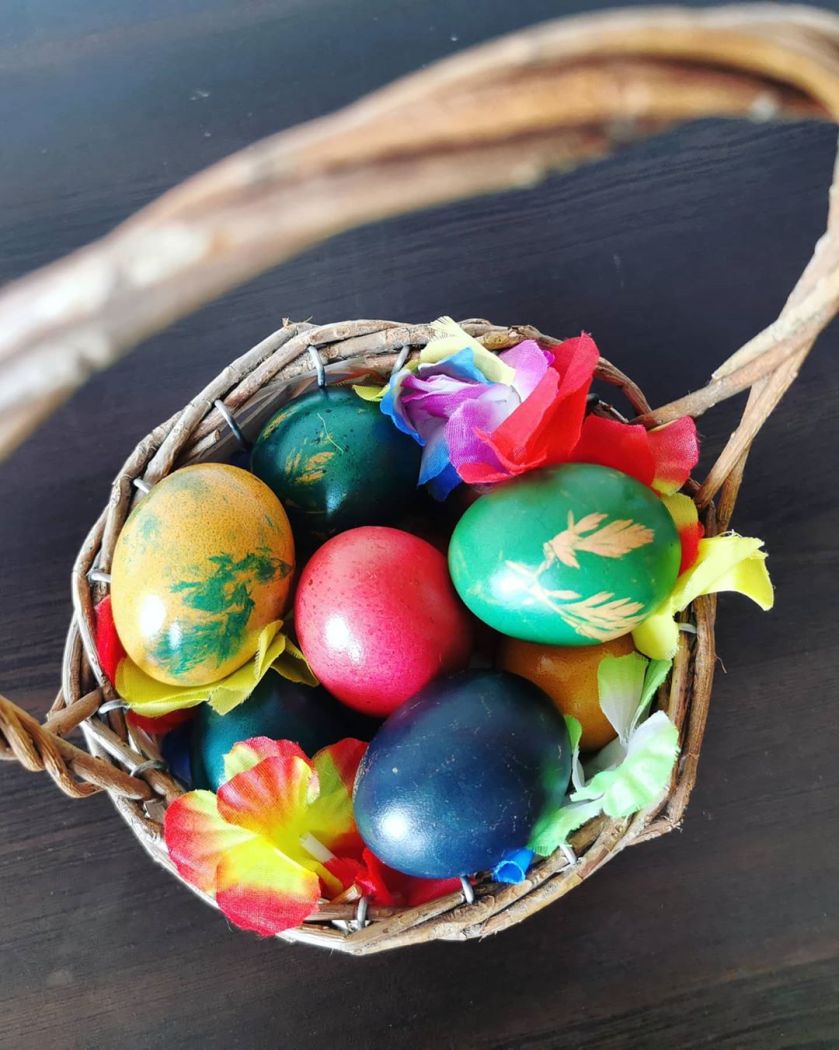
.And yes…egg pecking is probably the reason why every child in the Balkans loves Easter and why many of them do not necessarily enjoy the taste of boiled eggs in later life. All my childhood memories around Easter revolve first around “egg fights” (basically testing which egg is stronger) with beautifully decorated boiled eggs, family fussing around bringing and taking away dishes, and tipsy relatives, arguing over politics or football.
And of course, her majesty – The Food . So many variations out there. But my absolute favorites are the sweet Easter breads – made with love and tremendous amounts of eggs, sugar and all the possible fillings you could think of – from raisins and chocolate chips to vanilla cream and Turkish delight. HERE is one of the best collections of those I could find.
There is a good opportunity to test your baking skills and imagine through your taste buds that you are travelling around the world, when you cannot travel further from the bedroom to the kitchen.
 Never have I ever